Why it matters more up here
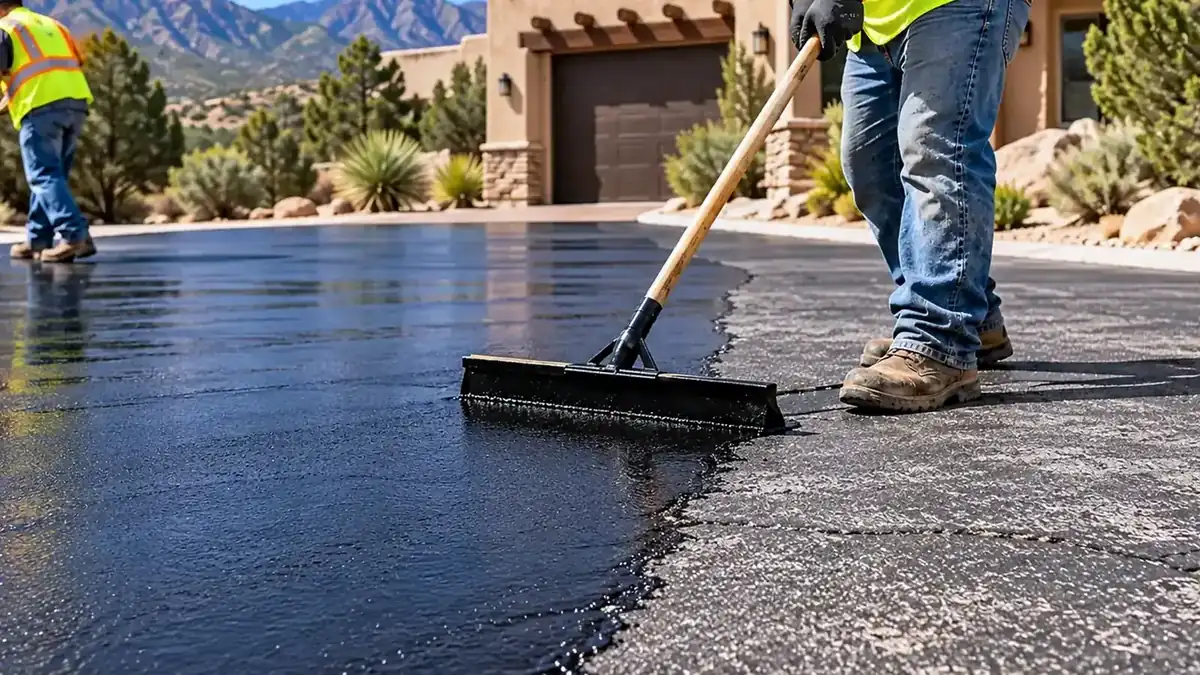
At East Mountain elevations, UV is stronger, nights are colder and snow sits longer. Sun dries the asphalt binder; water then works into hairline cracks and freezes. Sealcoat slows both, and fall crack sealing keeps water out before winter.
How often
| Situation | Typical interval |
|---|---|
| New driveway | First coat after about a year |
| Sunny, south-facing drive | Every 2–3 years |
| Shaded drive under pines | Every 3–4 years |
| Plowed regularly | Check yearly; touch up worn lanes |
The right time of year
Sealer needs warm surfaces and dry weather to cure. Up here, late spring through early fall works best, with mornings or midday scheduled around afternoon storms. Late-season jobs are limited by cold nights.
A proper job
- Clean needles, sand and debris; remove weeds from cracks.
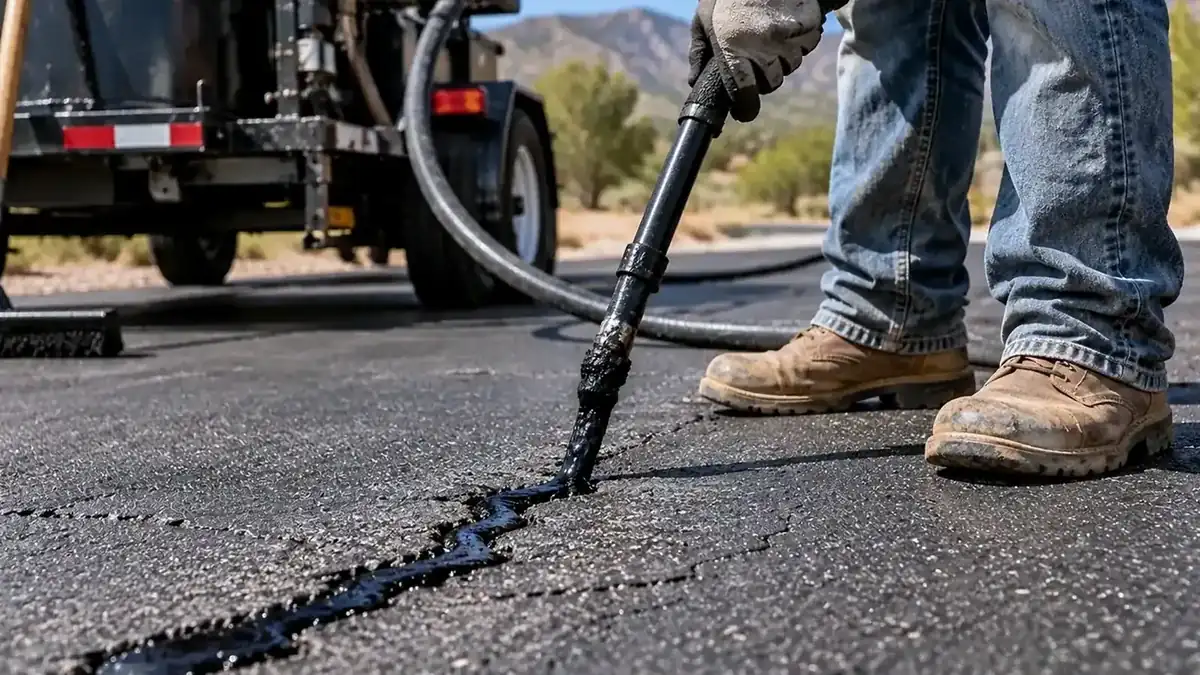
- Hot-pour crack sealing first — see crack sealing.
- Prime oil spots.
- Two coats on most drives; extra attention on steep sections where water runs.
- Barricade until it's set.
Steep drives
On steep grades, some owners ask for sand mixed into the sealer for traction in winter. Sealcoat itself doesn't make asphalt slippery, but smooth fresh sealer on a steep slope can feel slick when wet. Ask about it for climbs like those in how steep is too steep.
When not to sealcoat
- Over potholes, ruts or alligator cracking — repair first (asphalt repair)
- On a driveway less than a year old
- Right before a storm or a cold night
Call (505) 578-7882 for a quote. See also sealcoating and the spring driveway checkup.
Questions we get
Does sealcoat protect against snowplows?
It helps the surface resist wear, but plow blades can still scrape it. Raise the blade slightly or use a poly edge.
Can I sealcoat a chip seal driveway?
Chip seal is usually refreshed with a new chip layer instead of sealcoat.
How long until I can drive on it?
Usually by the next day in warm weather; we'll give you a specific time.